> ## Documentation Index
> Fetch the complete documentation index at: https://platform.minimax.io/docs/llms.txt
> Use this file to discover all available pages before exploring further.
# OpenClaw
> Use the latest MiniMax M-series models for anything you can think of in OpenClaw.
[**OpenClaw**](https://github.com/openclaw/openclaw) is a personal AI assistant running locally, integrating with messaging platforms for control.
## Prerequisites
* A MiniMax [Subscription Key](https://platform.minimax.io/user-center/payment/token-plan) with Token Plan or Credits access
* A computer with terminal access (macOS, Linux, or Windows with WSL)
***
## Install and Configure OpenClaw
Run the installation command in your terminal:
```bash theme={null}
curl -fsSL https://openclaw.ai/install.sh | bash
```
You'll see this entry page:
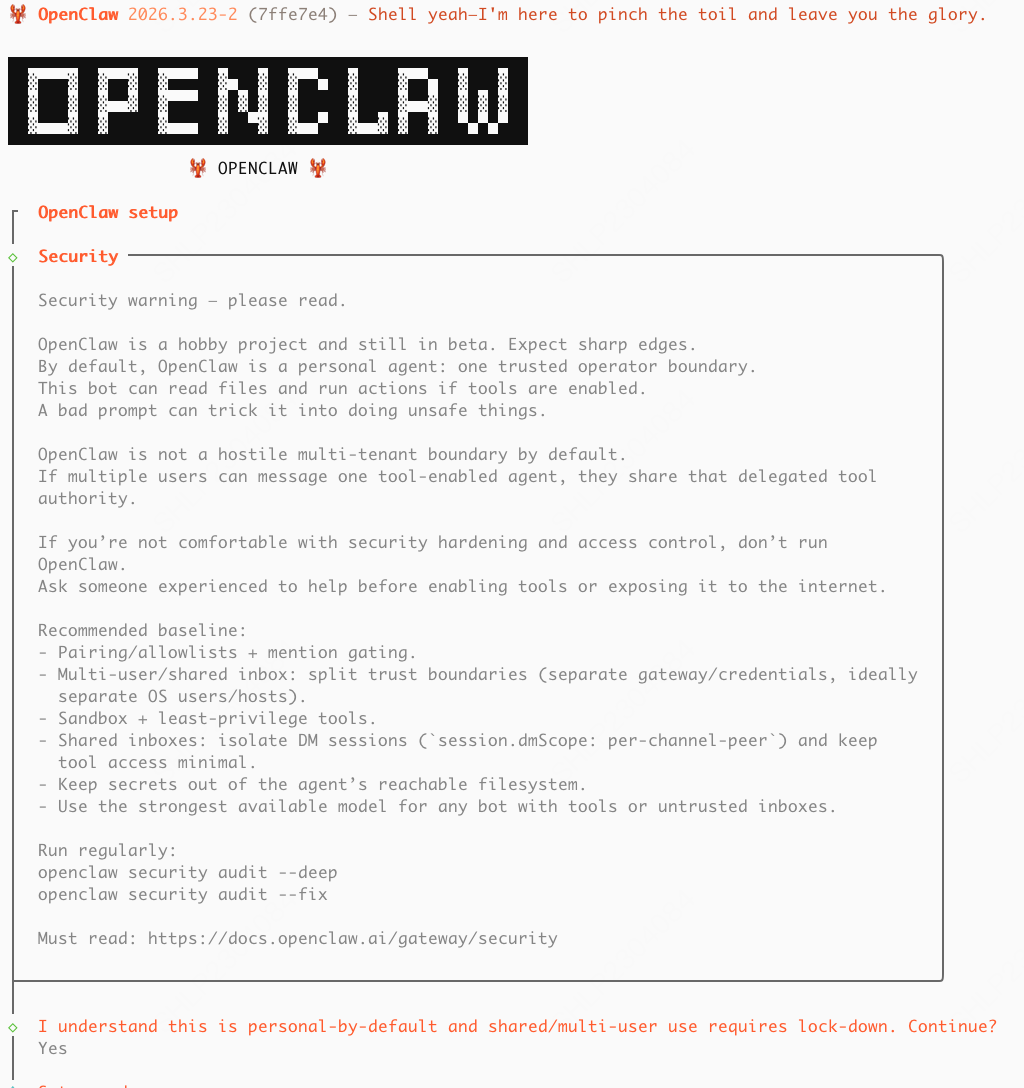 Select **"Yes"** .
Select **"QuickStart"** to use the guided setup.
Select **"MiniMax"** as the model provider.
Select **"MiniMax Global — OAuth (minimax.io)"** as the authentication method.
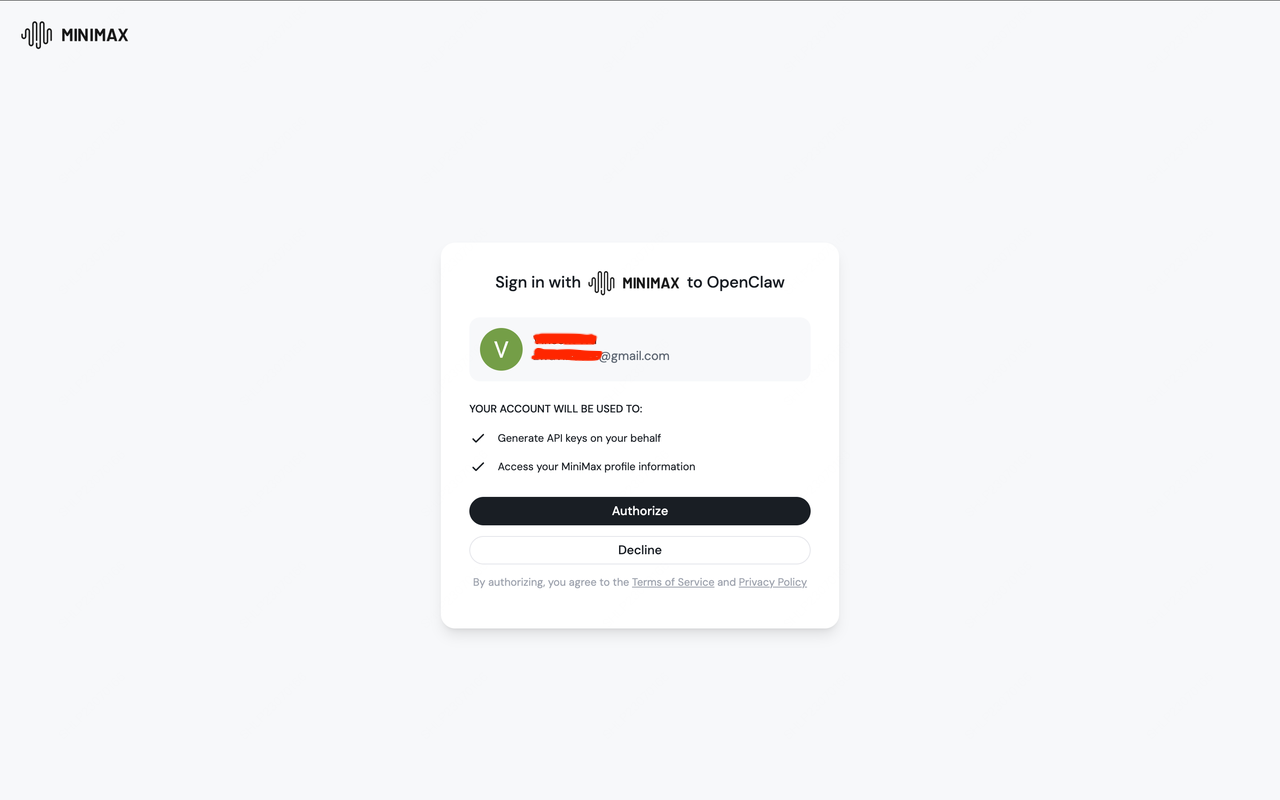
You'll be sent to a browser window to sign in to or sign up for your MiniMax API Platform account.
Select **"Authorize"**, after which you can return to the terminal.
Select **"Yes"** .
Select **"QuickStart"** to use the guided setup.
Select **"MiniMax"** as the model provider.
Select **"MiniMax Global — OAuth (minimax.io)"** as the authentication method.
You'll be sent to a browser window to sign in to or sign up for your MiniMax API Platform account.
Select **"Authorize"**, after which you can return to the terminal.
 A model picker will appear with the available models already selected. Press **Enter** to continue.
Back in the terminal, select a messaging channel to connect. OpenClaw supports a range of platforms including Telegram, WhatsApp, Discord, iMessage, and more.
A model picker will appear with the available models already selected. Press **Enter** to continue.
Back in the terminal, select a messaging channel to connect. OpenClaw supports a range of platforms including Telegram, WhatsApp, Discord, iMessage, and more.
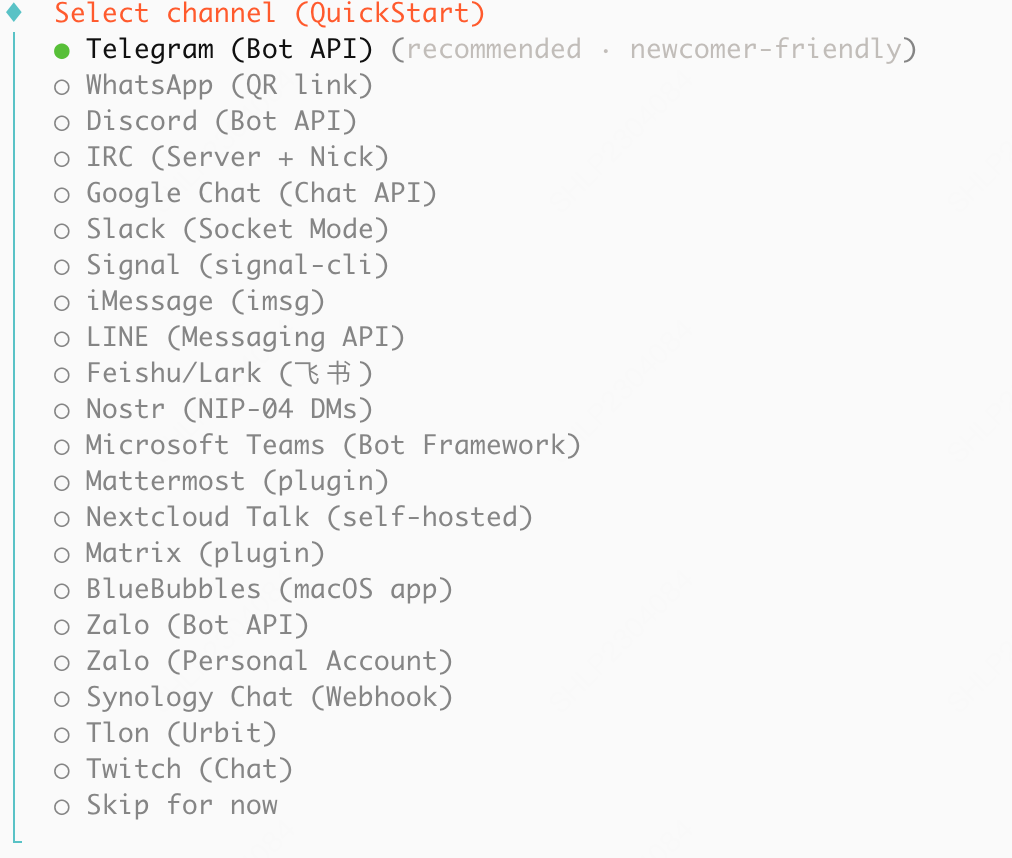 Follow the prompts for your chosen channel, then select **"Yes"** when asked to confirm.
 Select any additional skills you wish to install (press space to select, up and down arrows to navigate).
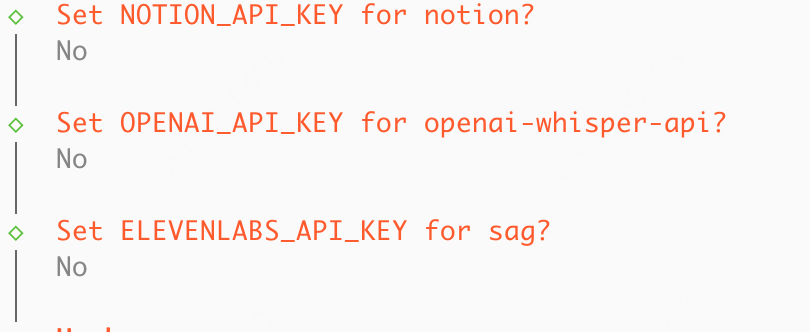
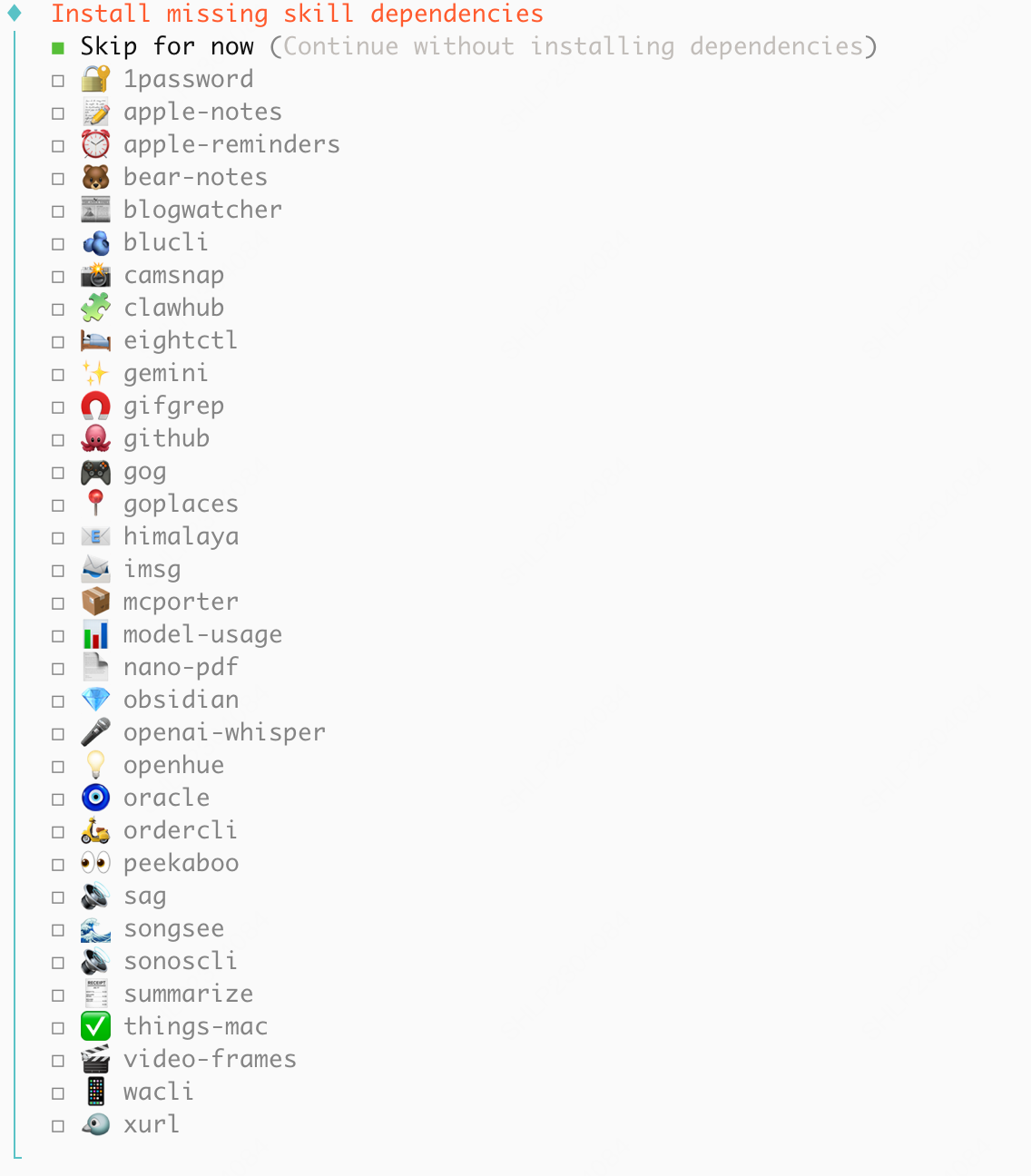 Configure additional API Keys for tools that OpenClaw can use (optional). Select **"Skip for now"** if you don't need additional tools.
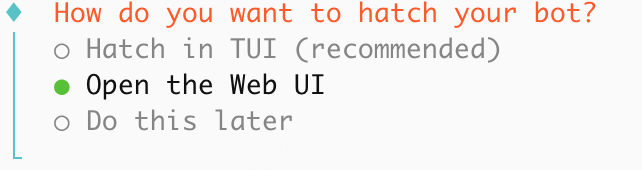
 Select **"Open the Web UI"** to access the OpenClaw dashboard.
 ***
## Toggle thinking
Toggle thinking at runtime with `/think`: `off` turns it off, `adaptive` (the default) lets M3 decide when to think.
***
## Advanced Capabilities
### Image Understanding
When logged in via OAuth, OpenClaw's `image` tool is **automatically wired** to MiniMax's [Image Understanding MCP server](/token-plan/mcp-guide), giving your agent image understanding capabilities out of the box — no extra setup needed.
If you authenticate with an **API Key manually**, or your OpenClaw build doesn't auto-include the Image Understanding MCP, pick one of the methods below to add image understanding to your agent.
[MiniMax CLI](https://github.com/MiniMax-AI/cli) (the `mmx` command) is the official multi-modal command-line tool. Once installed, OpenClaw can invoke `mmx vision` for image understanding — and you get **the same CLI for language, image, video, speech, music, and search** (7 multi-modal capabilities).
Make sure Node.js 18+ is available:
```bash theme={null}
# Check Node.js version (should be >= 18)
node -v
# If not installed, install LTS via nvm
curl -o- https://raw.githubusercontent.com/nvm-sh/nvm/v0.39.7/install.sh | bash
nvm install --lts
```
Run the following command in your terminal for a global install:
```bash theme={null}
npm install -g mmx-cli
```
⭐️ Or hand install, login, and SKILL setup to OpenClaw in one go (replace `sk-xxxxx` with your actual key):
```plaintext theme={null}
Please set up MiniMax CLI (https://github.com/MiniMax-AI/cli) for me with these three steps:
1. Install CLI globally: run `npm install -g mmx-cli`, then verify with `mmx --version`
2. Sign in with API Key: run `mmx auth login --api-key sk-xxxxx`
3. Install the official SKILL: run `npx skills add MiniMax-AI/cli -y -g`
After that, please run `mmx quota` to check my Token Plan balance and confirm everything is wired up.
```
Authenticate with your API Key (replace `sk-xxxxx` with your own Key):
```bash theme={null}
mmx auth login --api-key sk-xxxxx
```
The latest mmx-cli auto-detects your service region from the Key — no manual region setup is usually needed.
The region follows the platform where your API service was purchased: `cn` for the [MiniMax China Token Plan](https://platform.minimaxi.com/subscribe/token-plan), or `global` for the [MiniMax International Token Plan](https://platform.minimax.io/subscribe/token-plan).
If you hit a 401 after logging in, the region likely didn't auto-match. Set it manually:
```bash theme={null}
mmx config set --key region --value cn # China API service
mmx config set --key region --value global # International API service
```
Run `mmx auth status` to confirm the region matches the platform where your subscription was purchased.
Once logged in, run `mmx quota` to view your Token Plan balance and confirm the setup is working.
If you'll be invoking `mmx` from inside OpenClaw, we recommend adding the official SKILL.md so the agent makes better tool calls without having to read `--help` on the fly:
```bash theme={null}
npx skills add MiniMax-AI/cli -y -g
```
The SKILL is auto-symlinked into `~/.openclaw/skills/`, and OpenClaw will pick it up on the next launch.
Tell OpenClaw to prefer `mmx vision` for any future image understanding:
```plaintext theme={null}
Going forward, prefer the mmx vision tool for image understanding,
invoke it via `mmx vision describe --image ` and parse the result.
```
Send an image in OpenClaw and check that it auto-invokes `mmx vision describe --image ` and returns a correct description.
Wire up the [Token Plan MCP](/token-plan/mcp-guide) to use the `understand_image` tool.
Make sure uv (the Python package manager) is available:
```bash theme={null}
# Check
which uv
# If not installed, via pip
pip install uv
# Or via curl
curl -LsSf https://astral.sh/uv/install.sh | sh
```
For manual setup, follow the [Token Plan MCP guide](/token-plan/mcp-guide). Core steps:
1. Install the `mcporter` skill (an MCP server manager)
2. Configure `minimax-coding-plan-mcp` per the official guide
3. Set the `MINIMAX_API_KEY` environment variable (Token Plan API Key starts with `sk-cp`):
```bash theme={null}
export MINIMAX_API_KEY="sk-..."
```
⭐️ Or hand the entire flow to OpenClaw with this prompt (**replace `sk-xxxxxxx` with your actual API Key**):
```plaintext theme={null}
First install the mcporter skill, then follow https://platform.minimax.io/docs/token-plan/mcp-guide to configure the MCP. My MiniMax API Key is sk-xxxxxxx. Finally use the mcporter skill to wire it up.
```
Tell OpenClaw to prefer `understand_image` for image understanding:
```plaintext theme={null}
Going forward, use the understand_image tool from minimax-coding-plan-mcp for any image understanding.
```
Send an image in OpenClaw and check it auto-invokes the `understand_image` tool and returns a correct description.
***
### Web Search
OpenClaw doesn't ship with web search out of the box. Add it via one of the methods below (Token Plan subscribers, API Key starts with `sk-cp`).
`mmx search` is the web-search command from MiniMax CLI. No separate MCP server process — OpenClaw invokes it directly via Bash.
Make sure Node.js 18+ is available:
```bash theme={null}
# Check Node.js version (should be >= 18)
node -v
# If not installed, install LTS via nvm
curl -o- https://raw.githubusercontent.com/nvm-sh/nvm/v0.39.7/install.sh | bash
nvm install --lts
```
Run the following command in your terminal for a global install:
```bash theme={null}
npm install -g mmx-cli
```
⭐️ Or hand install, login, and SKILL setup to OpenClaw in one go (replace `sk-xxxxx` with your actual key):
```plaintext theme={null}
Please set up MiniMax CLI (https://github.com/MiniMax-AI/cli) for me with these three steps:
1. Install CLI globally: run `npm install -g mmx-cli`, then verify with `mmx --version`
2. Sign in with API Key: run `mmx auth login --api-key sk-xxxxx`
3. Install the official SKILL: run `npx skills add MiniMax-AI/cli -y -g`
After that, please run `mmx quota` to check my Token Plan balance and confirm everything is wired up.
```
Authenticate with your API Key (replace `sk-xxxxx` with your own Key):
```bash theme={null}
mmx auth login --api-key sk-xxxxx
```
The latest mmx-cli auto-detects your service region from the Key — no manual region setup is usually needed.
The region follows the platform where your API service was purchased: `cn` for the [MiniMax China Token Plan](https://platform.minimaxi.com/subscribe/token-plan), or `global` for the [MiniMax International Token Plan](https://platform.minimax.io/subscribe/token-plan).
If you hit a 401 after logging in, the region likely didn't auto-match. Set it manually:
```bash theme={null}
mmx config set --key region --value cn # China API service
mmx config set --key region --value global # International API service
```
Run `mmx auth status` to confirm the region matches the platform where your subscription was purchased.
Once logged in, run `mmx quota` to view your Token Plan balance and confirm the setup is working.
If you'll be invoking `mmx` from inside OpenClaw, we recommend adding the official SKILL.md so the agent makes better tool calls without having to read `--help` on the fly:
```bash theme={null}
npx skills add MiniMax-AI/cli -y -g
```
The SKILL is auto-symlinked into `~/.openclaw/skills/`, and OpenClaw will pick it up on the next launch.
`mmx search` offers two invocation forms:
```bash theme={null}
# Simple call (human-friendly, readable text output)
mmx search "latest MiniMax AI updates"
# Structured call (Agent-friendly)
mmx search query --q "MiniMax M2.7 release" --output json
```
Example prompt for OpenClaw:
```plaintext theme={null}
Use the mmx search tool to search "OpenClaw multi-Agent orchestration",
invoke it via `mmx search query --q "..." --output json` to get structured results,
then summarize the top 3 hits' titles, links, and key snippets.
```
OpenClaw will run `mmx search query --q "..." --output json` via the Bash tool and hand the stdout JSON to the model directly — no MCP server process needed.
```plaintext theme={null}
Going forward, prefer the mmx search tool for web search,
invoke it via `mmx search query --q "..." --output json` and parse the JSON.
```
Wire up the [Token Plan MCP](/token-plan/mcp-guide) to use the `web_search` tool.
Make sure uv (the Python package manager) is available:
```bash theme={null}
# Check
which uv
# If not installed, via pip
pip install uv
# Or via curl
curl -LsSf https://astral.sh/uv/install.sh | sh
```
For manual setup, follow the [Token Plan MCP guide](/token-plan/mcp-guide). Core steps:
1. Install the `mcporter` skill (an MCP server manager)
2. Configure `minimax-coding-plan-mcp` per the official guide
3. Set the `MINIMAX_API_KEY` environment variable (Token Plan API Key starts with `sk-cp`):
```bash theme={null}
export MINIMAX_API_KEY="sk-..."
```
⭐️ Or hand the entire flow to OpenClaw with this prompt (**replace `sk-xxxxxxx` with your actual API Key**):
```plaintext theme={null}
First install the mcporter skill, then follow https://platform.minimax.io/docs/token-plan/mcp-guide to configure the MCP. My MiniMax API Key is sk-xxxxxxx. Finally use the mcporter skill to wire it up.
```
Tell OpenClaw to prefer `web_search`:
```plaintext theme={null}
Going forward, use the web_search tool from minimax-coding-plan-mcp for any web search.
```
Ask OpenClaw something requiring up-to-date info, and check it auto-invokes the `web_search` tool and returns search results.
For a full step-by-step walkthrough of connecting OpenClaw to Telegram (including bot creation and pairing), see the [OpenClaw Cookbook guide](/solutions/openclaw).
***
## Toggle thinking
Toggle thinking at runtime with `/think`: `off` turns it off, `adaptive` (the default) lets M3 decide when to think.
***
## Advanced Capabilities
### Image Understanding
When logged in via OAuth, OpenClaw's `image` tool is **automatically wired** to MiniMax's [Image Understanding MCP server](/token-plan/mcp-guide), giving your agent image understanding capabilities out of the box — no extra setup needed.
If you authenticate with an **API Key manually**, or your OpenClaw build doesn't auto-include the Image Understanding MCP, pick one of the methods below to add image understanding to your agent.
[MiniMax CLI](https://github.com/MiniMax-AI/cli) (the `mmx` command) is the official multi-modal command-line tool. Once installed, OpenClaw can invoke `mmx vision` for image understanding — and you get **the same CLI for language, image, video, speech, music, and search** (7 multi-modal capabilities).
Make sure Node.js 18+ is available:
```bash theme={null}
# Check Node.js version (should be >= 18)
node -v
# If not installed, install LTS via nvm
curl -o- https://raw.githubusercontent.com/nvm-sh/nvm/v0.39.7/install.sh | bash
nvm install --lts
```
Run the following command in your terminal for a global install:
```bash theme={null}
npm install -g mmx-cli
```
⭐️ Or hand install, login, and SKILL setup to OpenClaw in one go (replace `sk-xxxxx` with your actual key):
```plaintext theme={null}
Please set up MiniMax CLI (https://github.com/MiniMax-AI/cli) for me with these three steps:
1. Install CLI globally: run `npm install -g mmx-cli`, then verify with `mmx --version`
2. Sign in with API Key: run `mmx auth login --api-key sk-xxxxx`
3. Install the official SKILL: run `npx skills add MiniMax-AI/cli -y -g`
After that, please run `mmx quota` to check my Token Plan balance and confirm everything is wired up.
```
Authenticate with your API Key (replace `sk-xxxxx` with your own Key):
```bash theme={null}
mmx auth login --api-key sk-xxxxx
```
The latest mmx-cli auto-detects your service region from the Key — no manual region setup is usually needed.
The region follows the platform where your API service was purchased: `cn` for the [MiniMax China Token Plan](https://platform.minimaxi.com/subscribe/token-plan), or `global` for the [MiniMax International Token Plan](https://platform.minimax.io/subscribe/token-plan).
If you hit a 401 after logging in, the region likely didn't auto-match. Set it manually:
```bash theme={null}
mmx config set --key region --value cn # China API service
mmx config set --key region --value global # International API service
```
Run `mmx auth status` to confirm the region matches the platform where your subscription was purchased.
Once logged in, run `mmx quota` to view your Token Plan balance and confirm the setup is working.
If you'll be invoking `mmx` from inside OpenClaw, we recommend adding the official SKILL.md so the agent makes better tool calls without having to read `--help` on the fly:
```bash theme={null}
npx skills add MiniMax-AI/cli -y -g
```
The SKILL is auto-symlinked into `~/.openclaw/skills/`, and OpenClaw will pick it up on the next launch.
Tell OpenClaw to prefer `mmx vision` for any future image understanding:
```plaintext theme={null}
Going forward, prefer the mmx vision tool for image understanding,
invoke it via `mmx vision describe --image ` and parse the result.
```
Send an image in OpenClaw and check that it auto-invokes `mmx vision describe --image ` and returns a correct description.
Wire up the [Token Plan MCP](/token-plan/mcp-guide) to use the `understand_image` tool.
Make sure uv (the Python package manager) is available:
```bash theme={null}
# Check
which uv
# If not installed, via pip
pip install uv
# Or via curl
curl -LsSf https://astral.sh/uv/install.sh | sh
```
For manual setup, follow the [Token Plan MCP guide](/token-plan/mcp-guide). Core steps:
1. Install the `mcporter` skill (an MCP server manager)
2. Configure `minimax-coding-plan-mcp` per the official guide
3. Set the `MINIMAX_API_KEY` environment variable (Token Plan API Key starts with `sk-cp`):
```bash theme={null}
export MINIMAX_API_KEY="sk-..."
```
⭐️ Or hand the entire flow to OpenClaw with this prompt (**replace `sk-xxxxxxx` with your actual API Key**):
```plaintext theme={null}
First install the mcporter skill, then follow https://platform.minimax.io/docs/token-plan/mcp-guide to configure the MCP. My MiniMax API Key is sk-xxxxxxx. Finally use the mcporter skill to wire it up.
```
Tell OpenClaw to prefer `understand_image` for image understanding:
```plaintext theme={null}
Going forward, use the understand_image tool from minimax-coding-plan-mcp for any image understanding.
```
Send an image in OpenClaw and check it auto-invokes the `understand_image` tool and returns a correct description.
***
### Web Search
OpenClaw doesn't ship with web search out of the box. Add it via one of the methods below (Token Plan subscribers, API Key starts with `sk-cp`).
`mmx search` is the web-search command from MiniMax CLI. No separate MCP server process — OpenClaw invokes it directly via Bash.
Make sure Node.js 18+ is available:
```bash theme={null}
# Check Node.js version (should be >= 18)
node -v
# If not installed, install LTS via nvm
curl -o- https://raw.githubusercontent.com/nvm-sh/nvm/v0.39.7/install.sh | bash
nvm install --lts
```
Run the following command in your terminal for a global install:
```bash theme={null}
npm install -g mmx-cli
```
⭐️ Or hand install, login, and SKILL setup to OpenClaw in one go (replace `sk-xxxxx` with your actual key):
```plaintext theme={null}
Please set up MiniMax CLI (https://github.com/MiniMax-AI/cli) for me with these three steps:
1. Install CLI globally: run `npm install -g mmx-cli`, then verify with `mmx --version`
2. Sign in with API Key: run `mmx auth login --api-key sk-xxxxx`
3. Install the official SKILL: run `npx skills add MiniMax-AI/cli -y -g`
After that, please run `mmx quota` to check my Token Plan balance and confirm everything is wired up.
```
Authenticate with your API Key (replace `sk-xxxxx` with your own Key):
```bash theme={null}
mmx auth login --api-key sk-xxxxx
```
The latest mmx-cli auto-detects your service region from the Key — no manual region setup is usually needed.
The region follows the platform where your API service was purchased: `cn` for the [MiniMax China Token Plan](https://platform.minimaxi.com/subscribe/token-plan), or `global` for the [MiniMax International Token Plan](https://platform.minimax.io/subscribe/token-plan).
If you hit a 401 after logging in, the region likely didn't auto-match. Set it manually:
```bash theme={null}
mmx config set --key region --value cn # China API service
mmx config set --key region --value global # International API service
```
Run `mmx auth status` to confirm the region matches the platform where your subscription was purchased.
Once logged in, run `mmx quota` to view your Token Plan balance and confirm the setup is working.
If you'll be invoking `mmx` from inside OpenClaw, we recommend adding the official SKILL.md so the agent makes better tool calls without having to read `--help` on the fly:
```bash theme={null}
npx skills add MiniMax-AI/cli -y -g
```
The SKILL is auto-symlinked into `~/.openclaw/skills/`, and OpenClaw will pick it up on the next launch.
`mmx search` offers two invocation forms:
```bash theme={null}
# Simple call (human-friendly, readable text output)
mmx search "latest MiniMax AI updates"
# Structured call (Agent-friendly)
mmx search query --q "MiniMax M2.7 release" --output json
```
Example prompt for OpenClaw:
```plaintext theme={null}
Use the mmx search tool to search "OpenClaw multi-Agent orchestration",
invoke it via `mmx search query --q "..." --output json` to get structured results,
then summarize the top 3 hits' titles, links, and key snippets.
```
OpenClaw will run `mmx search query --q "..." --output json` via the Bash tool and hand the stdout JSON to the model directly — no MCP server process needed.
```plaintext theme={null}
Going forward, prefer the mmx search tool for web search,
invoke it via `mmx search query --q "..." --output json` and parse the JSON.
```
Wire up the [Token Plan MCP](/token-plan/mcp-guide) to use the `web_search` tool.
Make sure uv (the Python package manager) is available:
```bash theme={null}
# Check
which uv
# If not installed, via pip
pip install uv
# Or via curl
curl -LsSf https://astral.sh/uv/install.sh | sh
```
For manual setup, follow the [Token Plan MCP guide](/token-plan/mcp-guide). Core steps:
1. Install the `mcporter` skill (an MCP server manager)
2. Configure `minimax-coding-plan-mcp` per the official guide
3. Set the `MINIMAX_API_KEY` environment variable (Token Plan API Key starts with `sk-cp`):
```bash theme={null}
export MINIMAX_API_KEY="sk-..."
```
⭐️ Or hand the entire flow to OpenClaw with this prompt (**replace `sk-xxxxxxx` with your actual API Key**):
```plaintext theme={null}
First install the mcporter skill, then follow https://platform.minimax.io/docs/token-plan/mcp-guide to configure the MCP. My MiniMax API Key is sk-xxxxxxx. Finally use the mcporter skill to wire it up.
```
Tell OpenClaw to prefer `web_search`:
```plaintext theme={null}
Going forward, use the web_search tool from minimax-coding-plan-mcp for any web search.
```
Ask OpenClaw something requiring up-to-date info, and check it auto-invokes the `web_search` tool and returns search results.
For a full step-by-step walkthrough of connecting OpenClaw to Telegram (including bot creation and pairing), see the [OpenClaw Cookbook guide](/solutions/openclaw).